
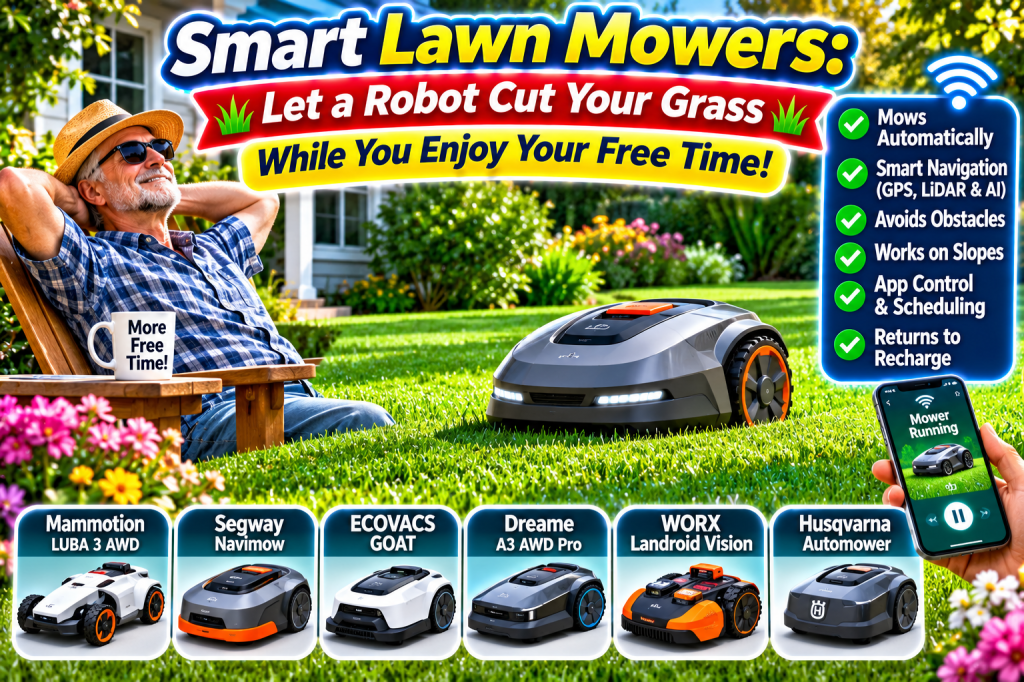
By Trusted Tech Buys
Imagine sitting on your back porch enjoying a cup of coffee while a robot quietly moves across your lawn, cutting the grass without you having to push a mower, pull a starter cord, or spend your Saturday afternoon working in the yard. It may sound like something from the future, but smart robotic lawn mowers are already doing exactly that. Today’s models can map your property, recognize obstacles, follow mowing schedules, navigate around trees, and automatically return to their charging stations when their batteries need attention. Some newer machines use artificial intelligence, cameras, GPS, and laser sensors to navigate without traditional boundary wires. But are they really worth the money? Let’s look at how these machines work, which brands are worth exploring, and what you should know before buying one.
What Is a Smart Robotic Lawn Mower?
A smart robotic lawn mower is a battery-powered machine that cuts grass automatically with minimal direct involvement from the homeowner.
Think of it as a robot vacuum cleaner for your yard.
Instead of manually pushing a mower around your property, you set up the robotic mower, define the areas where it should operate, and schedule when it should cut the grass.
Depending on the model, it can:
- Automatically mow designated lawn areas.
- Navigate around trees, landscaping, and obstacles.
- Follow schedules programmed through a smartphone.
- Return to its charging station when necessary.
- Avoid designated flowerbeds and other restricted areas.
- Manage multiple lawn zones.
- Send notifications about its status.
The goal is not necessarily to mow the entire lawn in one afternoon. Many robotic mowers cut a little grass frequently, keeping the lawn at a more consistent height.
How Does a Smart Lawn Mower Know Where to Go?
This is where the technology gets interesting. Manufacturers use several different navigation systems.
1. GPS and RTK Navigation
RTK stands for Real-Time Kinematic positioning. It uses satellite signals and correction information to help a mower determine its location much more precisely than ordinary GPS.
Some systems require an antenna or reference station installed on your property. Others use network-based correction services.
This technology helps the mower follow mapped boundaries and mow in organized patterns.
2. Artificial Intelligence and Cameras
Some robotic mowers use cameras and AI-powered software to recognize grass, landscaping, obstacles, and other objects.
The mower uses this information to make navigation decisions.
LiDAR uses laser light to measure distances and create a map of the surrounding environment. Some newer lawn mowers combine LiDAR with cameras to navigate around obstacles and map complicated yards.
4. Boundary Wires
Older robotic mowers often require a wire installed around the perimeter of the lawn. The mower detects the wire and uses it to understand where it is allowed to operate.
This method can be dependable, but installing the wire takes time. Newer wire-free systems are making setup easier for many homeowners.
Six Smart Lawn Mowers Worth Exploring
Here are several products and manufacturers worth comparing. Each offers a different combination of navigation, lawn coverage, terrain capability, and price.
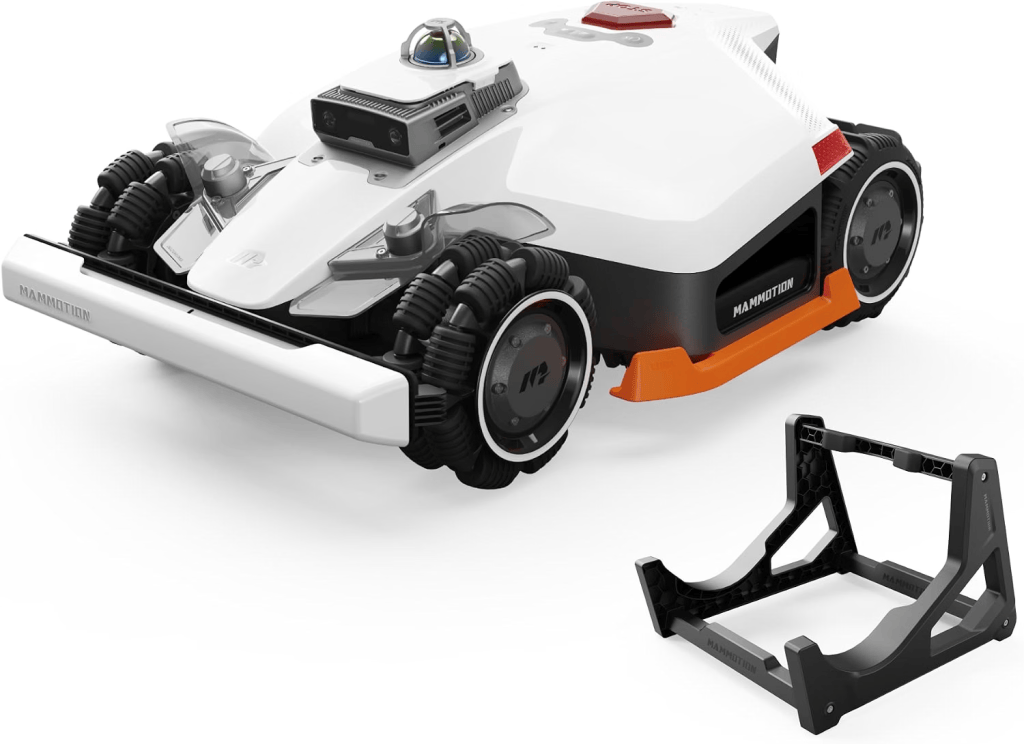
1. Mammotion LUBA 3 AWD – Designed for Larger and More Challenging Lawns
Mammotion’s LUBA 3 AWD is designed for homeowners who have larger properties, slopes, and complicated landscaping.
It combines 360-degree LiDAR, satellite positioning, and AI vision to navigate the lawn. Its all-wheel-drive design is intended to handle challenging terrain.
Features include:
- Wire-free lawn mapping.
- AI-assisted obstacle detection.
- Smartphone control and scheduling.
- Multiple mowing zones.
- All-wheel drive.
- Models designed for different lawn sizes.
The manufacturer’s listed configurations include versions covering approximately 0.37 acre, 0.75 acre, and 1.25 acres.
Why consider it? Homeowners with uneven yards or more complicated landscaping may appreciate the all-wheel-drive system and advanced navigation.
2. Segway Navimow – Smart Mowing Without Traditional Boundary Wires
Segway is another major name in robotic lawn care.
Its Navimow family includes different models designed for small residential lawns through much larger properties.
Depending on the model, features include:
- Virtual lawn boundaries.
- Automatic mapping.
- Smartphone app controls.
- Multiple mowing zones.
- Obstacle recognition.
- Scheduled mowing.
- Satellite and vision-based navigation.
Some newer Navimow models also use LiDAR technology.
Why consider it? Navimow offers several models, making it possible to compare a smaller mower for a modest yard with more advanced machines for larger properties.
3. ECOVACS GOAT – Robotic Lawn Care With LiDAR
You may recognize ECOVACS from its robot vacuum cleaners. The company also makes robotic lawn mowers under its GOAT product family.
The GOAT models use different navigation technologies, including LiDAR and AI vision.
Features on selected models include:
- Automatic lawn mapping.
- Wireless installation.
- Obstacle detection.
- Smartphone scheduling.
- Edge-trimming features.
- Automated charging.
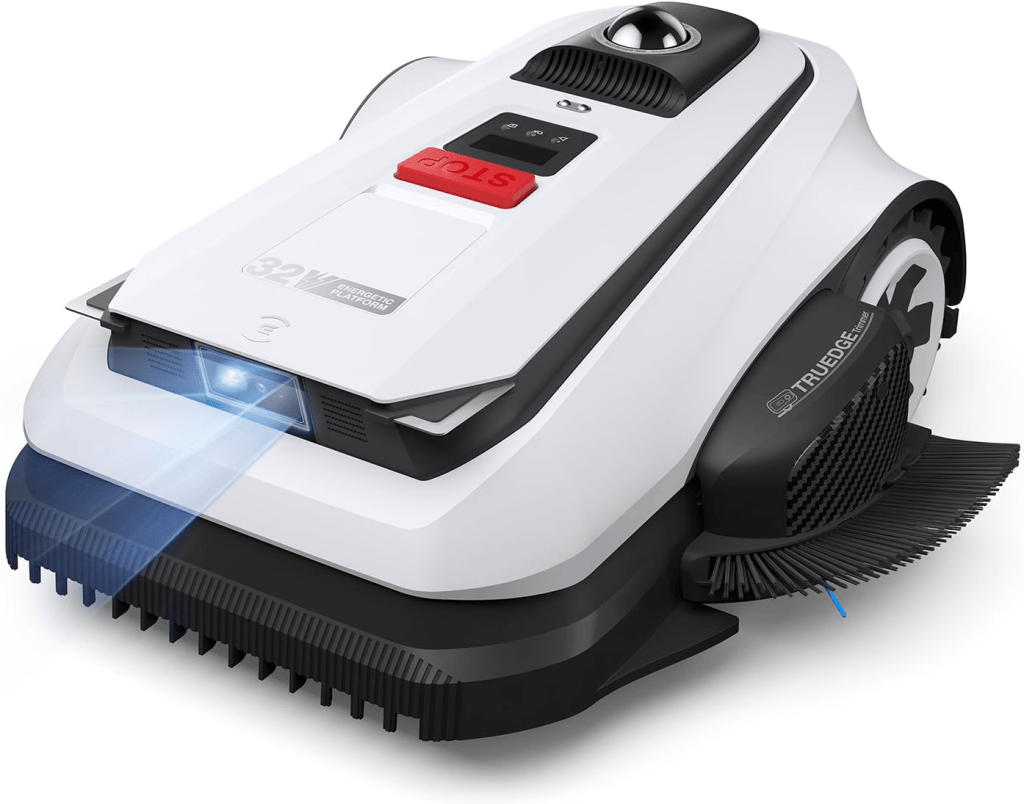
The GOAT A3000 LiDAR PRO is designed for properties up to approximately three-quarters of an acre.
Why consider it? ECOVACS has experience with home robotics, and its GOAT lineup includes models with different navigation and cutting features.
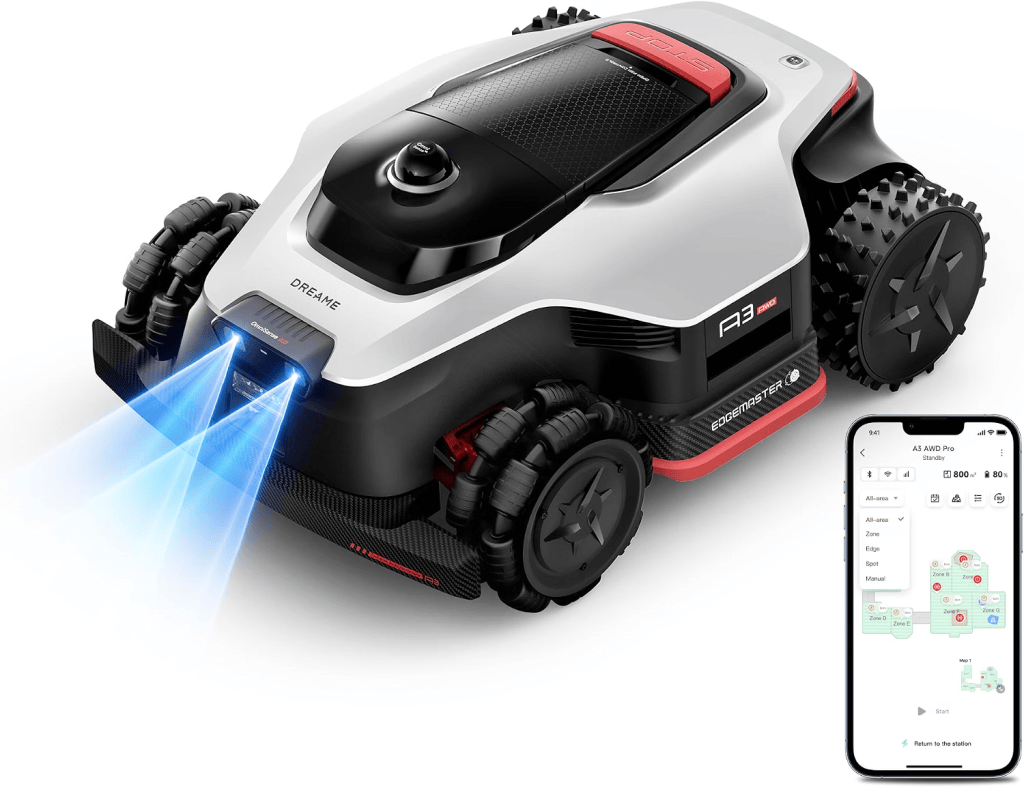
4. Dreame A3 AWD Pro – Advanced Navigation and All-Wheel Drive
Dreame has expanded from household cleaning equipment into robotic lawn care.
Its A3 AWD Pro combines 3D LiDAR and AI vision to map the lawn and navigate without traditional perimeter wires or a separate RTK antenna.
Features include:
- Four-wheel drive.
- 3D mapping.
- AI obstacle recognition.
- App-based controls.
- Automated mowing schedules.
- Navigation designed for slopes and uneven terrain.
The manufacturer advertises the ability to handle slopes of up to 80 percent under suitable conditions. That figure does not mean every steep or slippery lawn is safe for operation.
Why consider it? This is a premium option for homeowners who want advanced navigation and need a mower designed for challenging yards.
5. WORX Landroid Vision Cloud – A Smart Mower for Residential Lawns
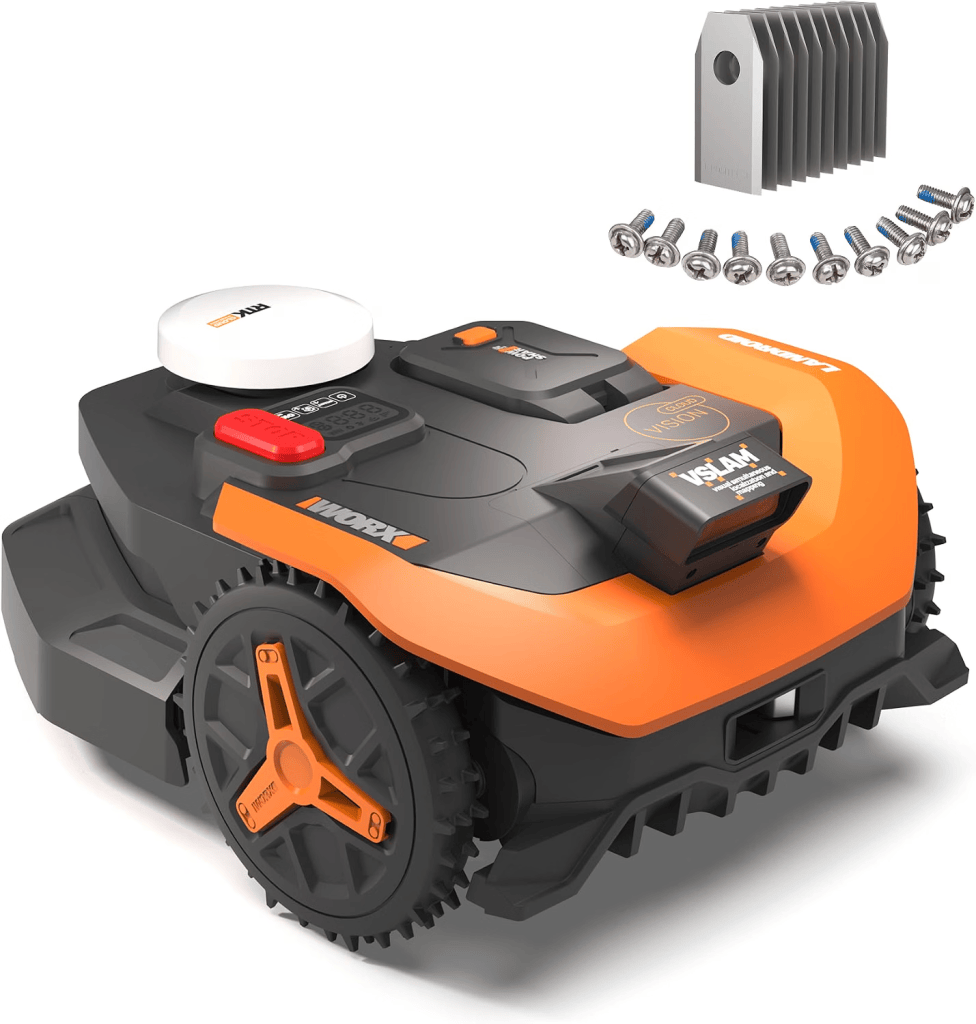
WORX is a familiar name in outdoor power equipment, and its Landroid robotic mowers offer another approach to automatic lawn maintenance.
Selected Vision Cloud models combine GPS-assisted navigation, camera technology, and AI features.
Features vary by model but can include:
- Virtual boundaries.
- Smartphone scheduling.
- Automatic mapping.
- Obstacle recognition.
- Different lawn coverage capacities.
- Optional or integrated edge-trimming attachments on selected versions.
Why consider it? WORX offers a recognizable outdoor equipment brand with multiple robotic mower sizes and configurations.
6. Husqvarna Automower – An Established Name in Robotic Lawn Care
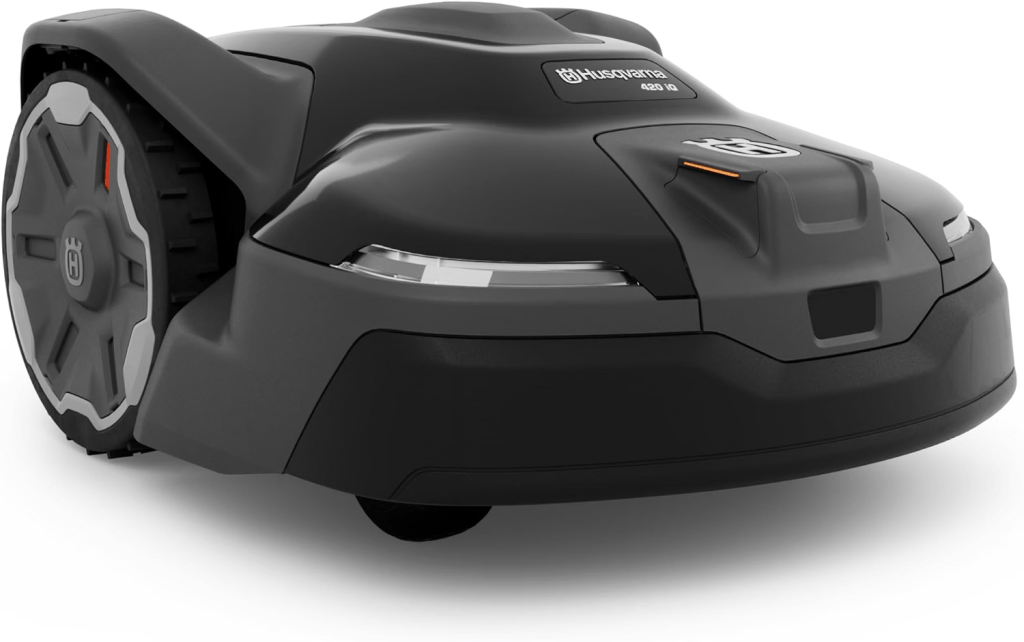
Husqvarna has been involved in robotic lawn mowing for many years.
Its Automower family includes models for smaller residential yards and larger properties.
Features vary by model and can include:
- Automatic mowing schedules.
- App-based control.
- GPS-assisted navigation.
- Virtual mapping on compatible models.
- Automatic charging.
- Weather and operating controls.
Some newer models offer wire-free installation using Husqvarna’s EPOS technology, while other configurations still use boundary wires.
Why consider it? Husqvarna offers a broad product family and an established dealer network that may be helpful when installation, service, and replacement parts matter.
What Size Lawn Can a Robot Mower Handle?
Not every robotic mower is designed for every property.
Some models are intended for small yards, while others can handle an acre or more.
Before buying, measure the actual area of grass that needs mowing. Do not count the entire property if much of it consists of a house, driveway, buildings, trees, or landscaping.
Also consider:
- Narrow passages between lawn sections.
- Steep slopes.
- Uneven ground.
- Trees that may interfere with satellite signals.
- Flowerbeds and garden borders.
- Multiple separate lawn areas.
A mower advertised for one acre may not be the best choice for a complicated one-acre property.
Can a Robot Lawn Mower Handle Montana Weather?
For homeowners in Montana and other northern states, this is an especially important question.
Robotic lawn mowers are primarily designed for grass-cutting seasons. They are not snow blowers, ice-clearing machines, or all-weather yard vehicles.
Cold temperatures, wet grass, frost, snow, and muddy ground can interfere with operation or damage equipment.
Before winter arrives:
- Follow the manufacturer’s winter-storage instructions.
- Clean grass and debris from the mower.
- Remove or maintain the battery as directed.
- Store the charging equipment appropriately.
- Protect the charging station from winter weather if required.
- Check whether the manufacturer recommends a garage or covered storage.
Do not assume a mower can remain outdoors all winter simply because it is advertised as weather-resistant.
Are Smart Lawn Mowers Safe Around Children and Pets?
Safety should be one of the first things you consider.
Robotic mowers contain sharp cutting blades. Although many models have sensors, lift detection, and obstacle recognition, those features do not eliminate every possible risk.
Important precautions include:
- Keep children and pets away while the mower is operating.
- Follow the manufacturer’s recommended operating hours.
- Avoid mowing when children are playing in the yard.
- Check the lawn for toys, branches, and other objects.
- Keep hands away from the cutting deck.
- Use the mower’s safety lockout before cleaning or servicing it.
- Never assume obstacle detection will recognize every animal or object.
Also check local rules and manufacturer recommendations concerning nighttime operation.
What About Lawn Edges?
One common complaint about robotic lawn mowers is that they may leave strips of grass along fences, walls, garden borders, and other edges.
Some newer models include special cutting arrangements or edge-trimming attachments designed to reduce the amount of manual trimming required.
However, no robot mower should be assumed to eliminate all weed trimming. Check independent reviews and look closely at how each model handles the edges of a lawn similar to yours.
Frequently Asked Questions
1. Do smart robotic lawn mowers really cut grass automatically?
Yes. They are designed to mow mapped or designated lawn areas automatically, following schedules and returning to charging stations when necessary.
2. Do robotic lawn mowers need boundary wires?
Not all of them. Many newer models use GPS, RTK, cameras, LiDAR, or virtual mapping. Some older and less expensive models still require physical boundary wires.
3. Can a robot mower handle steep hills?
Some all-wheel-drive models are designed for steep slopes, but every mower has a specified maximum slope. Check the manufacturer’s rating and consider wet grass, soil conditions, and terrain.
4. Are robotic lawn mowers worth the money?
They can be worthwhile if you have a suitable lawn and want to reduce the time spent mowing. However, the initial purchase price is much higher than that of many traditional mowers.
5. Can I leave a robotic lawn mower outside in winter?
Follow the manufacturer’s storage instructions. Most homeowners should prepare the mower and battery for winter storage rather than assume it can operate or remain exposed to freezing conditions.
Final Thoughts From Trusted Tech Buys
Smart lawn mowers are changing the way homeowners think about yard maintenance. Instead of spending hours pushing a mower around the property, you can schedule a machine to handle routine grass cutting while you concentrate on other things.
The technology has improved considerably. Wire-free mapping, artificial intelligence, cameras, LiDAR, and all-wheel drive are making robotic mowing possible on more types of residential properties.
But these machines are not inexpensive, and choosing the wrong model can be a costly mistake.
Our advice is to measure your lawn, examine the slopes and landscaping, compare navigation systems, and check the manufacturer’s service and warranty arrangements before making a purchase.
Trusted Tech Buys — Smart Technology. Honest Reviews. Better Buys. Making Technology Easy to Understand for Everyone.


We Welcome Your Reply